Scaling from one property to many is not just an operations challenge—it’s a finance challenge. As hotels and restaurants add locations, complexity multiplies: more revenue streams, more payroll cycles, more vendors, more payment platforms, and more opportunities for inconsistency. Without a unified financial structure, growth can hide problems instead of creating profit.
Multi Unit Hospitality Accounting provides the framework that keeps expansion financially healthy. It standardizes how performance is recorded, strengthens controls that protect cash, and delivers reporting that makes unit-level decisions faster. When done well, Multi Unit Hospitality Accounting turns multiple locations into one coordinated financial system rather than a collection of disconnected books.
Key Takeaways
- Multi Unit Hospitality Accounting creates consistency across locations so leadership can compare performance fairly
- Standardized close routines and reconciliations reduce reporting delays and revenue leakage
- Strong Hospitality Finance & Controls protect margins as transaction volume increases
- Consolidated dashboards help hotels and restaurants act on trends quickly, not months later
- Multi Unit Hospitality Accounting scales best when paired with the right tech stack and clear ownership
Learn more about our Accounting Services!
1. Building a Scalable Finance Foundation Across Multiple Locations
Standardizing charts of accounts and department mapping
A multi-location business cannot scale on inconsistent categories. One site recording delivery fees as marketing while another records them as cost of sales makes comparisons meaningless. Multi Unit Hospitality Accounting begins by standardizing the chart of accounts across all properties and mapping departments in a consistent way.
Hotels often need department mapping for rooms, F&B outlets, events, spa, and other revenue centers. Restaurants often need clean segmentation for dine-in, delivery, catering, and bar. The purpose of Multi Unit Hospitality Accounting is to ensure these segments are recorded the same way everywhere.
This standardization is where Hospitality Accounting Firms often add the most immediate value. They implement consistent structures that support both Hospitality Accounting fundamentals and advanced multi-site analysis.
Creating a repeatable close process for every property
Month-end close is where multi-location complexity shows up. If each location sends invoices late, uses different cutoffs, or reconciles inconsistently, the close slows down and the numbers lose credibility. Multi Unit Hospitality Accounting relies on a repeatable close process with clear deadlines and responsibilities for each property.
A strong close process typically includes:
- defined invoice submission cutoffs
- scheduled reconciliation checkpoints during the month
- inventory count rules for outlets where applicable
- payroll finalization routines
- a fixed close calendar across all sites
When this rhythm is consistent, Multi Unit Hospitality Accounting produces statements quickly enough to influence decisions in the next trading cycle.
Defining roles: HQ finance vs on-site managers
Growth breaks unclear responsibility. Multi Unit Hospitality Accounting works best when local teams own operational inputs and HQ finance owns structure and governance. Managers should not be expected to “do accounting,” but they should own timely invoice submission, receiving discipline, and labor schedule accountability.
HQ finance typically owns coding rules, reconciliations, reporting, and control enforcement. This separation helps Restaurant Accountancy and hotel finance remain consistent without slowing operations. It also makes Outsourced Restaurant Accounting more effective if external teams are involved, because ownership is clear and processes are repeatable.
Multi Unit Hospitality Accounting becomes scalable when every location knows exactly what must be done and when.

2. Consolidated Reporting That Reveals What’s Really Driving Profit
Multi-location dashboards for revenue, labor, and margins
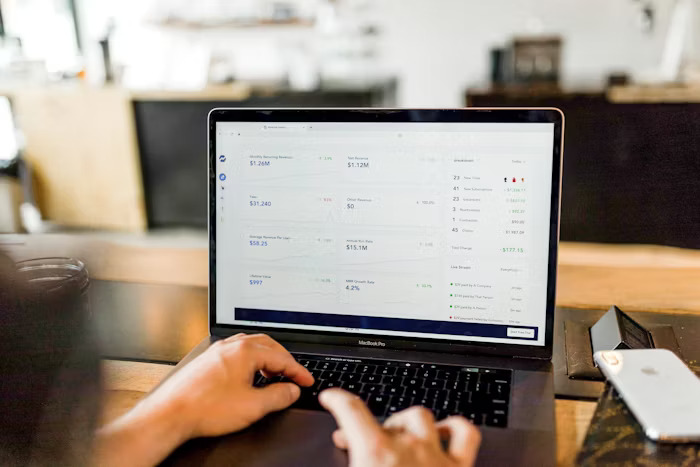
Leadership teams need a single view of performance that still allows drill-down by location. Multi Unit Hospitality Accounting supports consolidated dashboards that show revenue trends, prime cost drivers, and margin movement across all properties.
These dashboards are most useful when they are operationally aligned: weekly summaries for managers and deeper monthly views for executives. A clean dashboard structure allows leaders to spot outliers—locations where labor is drifting, food cost is rising, or channel mix is shifting—before the problem becomes systemic.
Multi Unit Hospitality Accounting turns reporting into a management tool when dashboards are timely and consistent across sites.
Comparing unit economics across hotels and restaurant concepts
Scaling successfully depends on unit economics. A business needs to understand what a “healthy unit” looks like: revenue per available room for hotels, contribution margin for outlets, labor efficiency, and overhead structure. Multi Unit Hospitality Accounting makes these comparisons possible by standardizing KPIs and cost categories.
For restaurant groups, Multi-Unit Restaurant Accounting is the mechanism that enables fair comparisons across concepts and formats. For hotel portfolios, department-level performance needs similar consistency. In both cases, Multi Unit Hospitality Accounting helps leadership identify which units are scalable and which need operational correction.
This is often where Restaurant CFO Services become valuable: interpreting unit economics, modeling expansion returns, and helping leadership decide where to invest next.
Separating performance by channel, department, and location
The fastest-growing hospitality groups typically earn revenue through multiple channels and service models. Restaurants may blend dine-in, delivery, events, and catering. Hotels may mix transient, corporate, group, and event revenue. Multi Unit Hospitality Accounting ensures these streams are separated consistently across properties so leadership can see true profitability.
This prevents common expansion mistakes such as scaling a channel that looks strong on revenue but weak on contribution after commissions, labor, and promotional deductions. Multi Unit Hospitality Accounting supports smarter growth by making the profit story visible, not just the sales story.
3. Controls That Stay Strong as the Business Expands
Approval workflows for purchasing, payroll, and capital spend
Controls fail when they rely on individual discipline rather than system design. As locations increase, spending risk increases: unapproved vendors, rushed purchases, duplicate invoices, and inconsistent payroll adjustments. Multi Unit Hospitality Accounting strengthens control by standardizing approval workflows across the group.
Effective controls typically include:
- role-based spending thresholds
- centralized vendor setup to prevent duplication and fraud
- invoice approval routing with audit trails
- scheduled payment runs with exception review
- capex approval frameworks for equipment and renovations
These controls are a core part of Hospitality Finance & Controls, keeping the business protected while still allowing fast operations at the unit level.
Reconciliation routines across POS, PMS, OTAs, and bank deposits
Multi-location hospitality businesses have complex revenue flows. Restaurants have POS systems, processors, delivery platforms, and refunds. Hotels have PMS postings, outlet POS, OTAs, processors, and group deposits. Multi Unit Hospitality Accounting requires structured reconciliation routines that validate revenue and cash movement across systems.
Weekly reconciliation is one of the strongest controls because it catches issues while transaction evidence is still available. Multi Unit Hospitality Accounting becomes more reliable when each location follows the same reconciliation rhythm and exceptions are tracked consistently.
This discipline reduces revenue leakage and improves cash predictability across the portfolio.
Vendor governance to prevent duplicate payments and cost creep
Vendor volume rises quickly with expansion. Without governance, price creep becomes normal and duplicate payments become more likely. Multi Unit Hospitality Accounting supports vendor governance through standardized vendor lists, contract tracking where relevant, and consistent invoice coding.
Restaurants benefit from purchasing discipline that stabilizes food costs. Hotels benefit from consistent procurement routines for operating supplies and outlet inventory. Multi Unit Hospitality Accounting makes cost behavior visible and comparable, which is essential for margin protection at scale.
Hospitality Consulting can add value here by translating vendor and cost insights into operational process improvements at the location level.
4. Forecasting and Cash Planning for Growth
Rolling forecasts that reflect seasonality and demand swings
Hospitality is seasonal by nature, and multi-location portfolios amplify that effect. Different locations may peak at different times, and demand can be influenced by events, tourism, and market shifts. Multi Unit Hospitality Accounting supports rolling forecasts that reflect these realities rather than relying on static annual budgets.
Forecasts typically include revenue assumptions, labor modeling, and vendor payment timing. When built on consistent reporting, Multi Unit Hospitality Accounting makes forecasting dependable enough to guide staffing decisions, purchasing plans, and marketing allocation.
This is where CFO-level planning becomes especially useful for groups balancing growth with liquidity management.
Cash planning for openings, renovations, and equipment cycles
Expansion is expensive. New openings require pre-opening payroll, deposits, marketing, and equipment. Hotels require ongoing capital cycles and renovations. Multi Unit Hospitality Accounting supports cash planning by separating operating cash needs from growth investments.
This improves decision-making because leadership can see whether expansion is financially viable without starving current operations. It also helps avoid the common mistake of funding growth through short-term cash that should be reserved for payroll, vendor payments, and seasonal dips.
Multi Unit Hospitality Accounting makes growth safer by making cash requirements visible early.
Scenario models to stress-test expansion decisions
Forecasts are only as strong as the scenarios tested. Multi Unit Hospitality Accounting supports scenario modeling that stress-tests new openings or acquisitions under different assumptions: slower ramp-up, higher payroll pressure, supplier cost spikes, or occupancy softness.
Scenario planning helps leadership decide how aggressive to be, what reserves are needed, and what operational levers can be adjusted if conditions change. It also strengthens investor and lender confidence when expansion plans are supported by disciplined financial modeling.
Finance Playbook Metrics for Multi-Location Hospitality
| Area | What to standardize | Why it matters | Example output |
|---|---|---|---|
| Revenue Mapping | Channels and departments | Clear profitability by stream | Dine-in vs delivery vs events |
| Labor Reporting | Roles and departments | Comparable efficiency tracking | Labor % by outlet/location |
| Purchasing Controls | Vendor and approvals | Prevents cost drift | Approved vendor list + thresholds |
| Reconciliation | Systems and cadence | Protects cash and accuracy | Weekly POS/PMS-to-bank matching |
| Forecasting | Assumptions and timing | Safer expansion decisions | Rolling 13-week cash plan |
5. Choosing Systems and Partners That Scale With You
Tech stack integration: POS, PMS, inventory, payroll, accounting
Technology decisions determine how scalable finance becomes. Multi Unit Hospitality Accounting works best when core systems integrate cleanly: POS for restaurants, PMS for hotels, payroll, inventory tools, and accounting platforms. When integrations are stable, reporting is faster and errors decline.
Standard data rules are just as important as tools. Multi Unit Hospitality Accounting requires consistent mapping so every location reports in the same structure. This is the foundation for reliable benchmarking and consolidated reporting.
Outsourced vs in-house finance: what fits at each stage
Different stages require different resourcing. Some groups build an internal finance team as they scale. Others use Outsourced Restaurant Accounting or external teams to standardize and accelerate reporting without hiring heavily.
Multi Unit Hospitality Accounting can work well in either model, but success depends on clear roles, documented routines, and consistent ownership. Hospitality Accounting Firms often provide specialist support for implementation and ongoing discipline, especially when multi-entity structures or consolidation is required.
Adding CFO-level strategy for funding, governance, and growth
At a certain scale, execution alone isn’t enough. Groups need strategic financial leadership: expansion modeling, cash forecasting, governance frameworks, and investor-ready reporting. Multi Unit Hospitality Accounting becomes significantly more valuable when paired with CFO-level planning—whether through in-house leadership or Restaurant CFO Services.
This level of strategy helps leadership choose which locations to expand, how to structure capital investment, and how to maintain profitability while growing. Multi Unit Hospitality Accounting supports this by ensuring the data foundation is consistent, timely, and defensible.
Want to learn more about Hospitality Accounting? Follow us
Conclusion
Scaling hotels and restaurants successfully requires more than strong operations. It requires a financial system that stays consistent as complexity rises. Multi Unit Hospitality Accounting delivers that system by standardizing reporting, strengthening controls, improving reconciliation discipline, and supporting forecasting that matches hospitality realities.
When Multi Unit Hospitality Accounting is implemented well, leaders gain clarity across locations, protect cash more effectively, and make growth decisions with confidence. For expanding hospitality groups, Multi Unit Hospitality Accounting is not just an accounting approach—it is the financial backbone that makes scaling profitable and sustainable.
Frequently Asked Questions
What is Multi Unit Hospitality Accounting?
It is an accounting and reporting system designed for hospitality groups with multiple locations, focused on standardization, consolidated visibility, controls, and scalable processes.
Why is standardizing the chart of accounts important across locations?
Because it ensures revenue and costs are recorded the same way everywhere, making comparisons accurate and enabling benchmarking and faster decision-making.
What reconciliations matter most for multi-location hospitality groups?
Routine matching across POS/PMS data, OTA or platform statements, processor settlements, and bank deposits to validate revenue and reduce payout gaps or leakage.
How does Multi Unit Hospitality Accounting protect margins?
It strengthens Hospitality Finance & Controls through approval workflows, vendor governance, invoice discipline, and variance routines that catch cost drift early.
When should a growing group add CFO-level support?
When expanding rapidly, planning openings or renovations, needing cash-flow forecasting and scenario modeling, or preparing for funding and investor-ready reporting.